Artemis II: The Complete Mission in Real-Time 3D
April 6, 2026
Experience the Artemis II mission of April 6, 2026: follow the spacecraft's real Earth-to-Moon trajectory and back, in a real-time 3D reconstruction.
It's April 1, 2026.
Artemis II is the first crewed flight to the Moon since Apollo. Four astronauts ride aboard Orion, bound for a loop around the far side and back.
Artemis II lifts off from Kennedy Space Center atop the Space Launch System, the most powerful rocket NASA has ever flown.
Two minutes in, the twin solid rocket boosters burn out and fall away toward the Atlantic.
The launch abort tower and the service-module panels are jettisoned, no longer needed now that the riskiest part of the climb is past.
The four RS-25 engines shut down and the core stage drops away, leaving Orion and the upper stage coasting toward orbit.
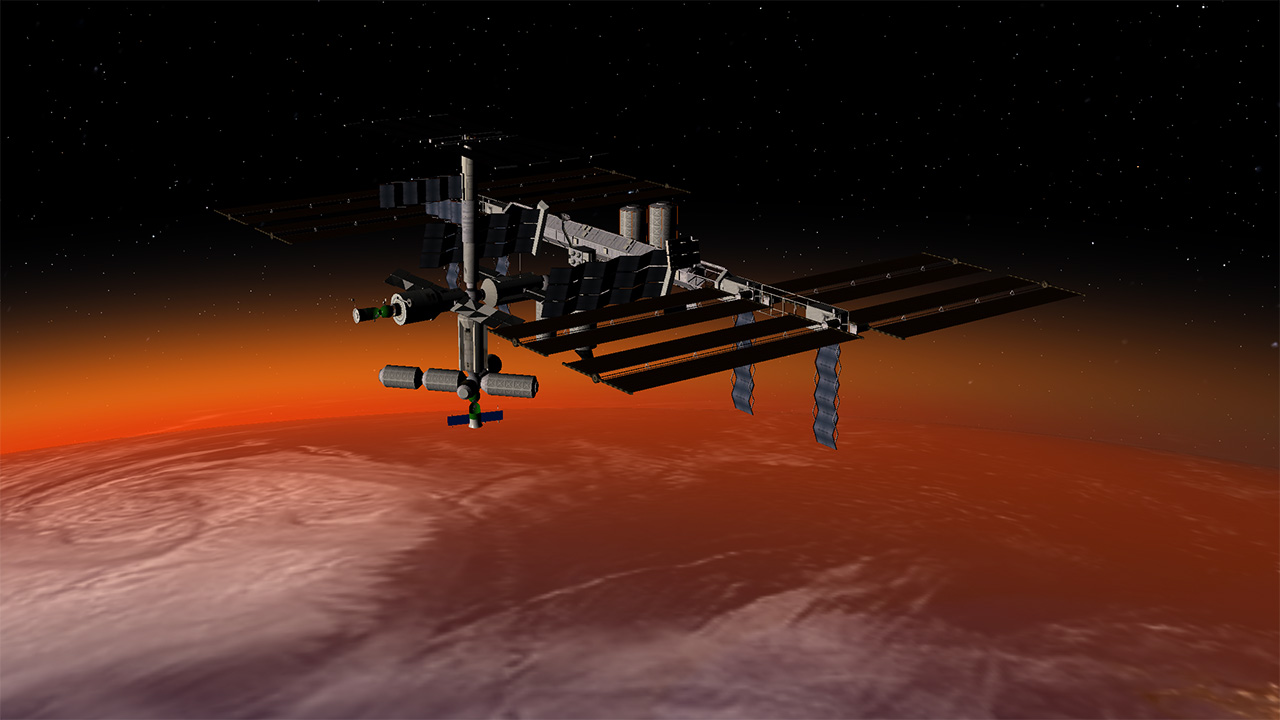
Orion unfurls its four solar-array wings, about 19 meters from tip to tip.
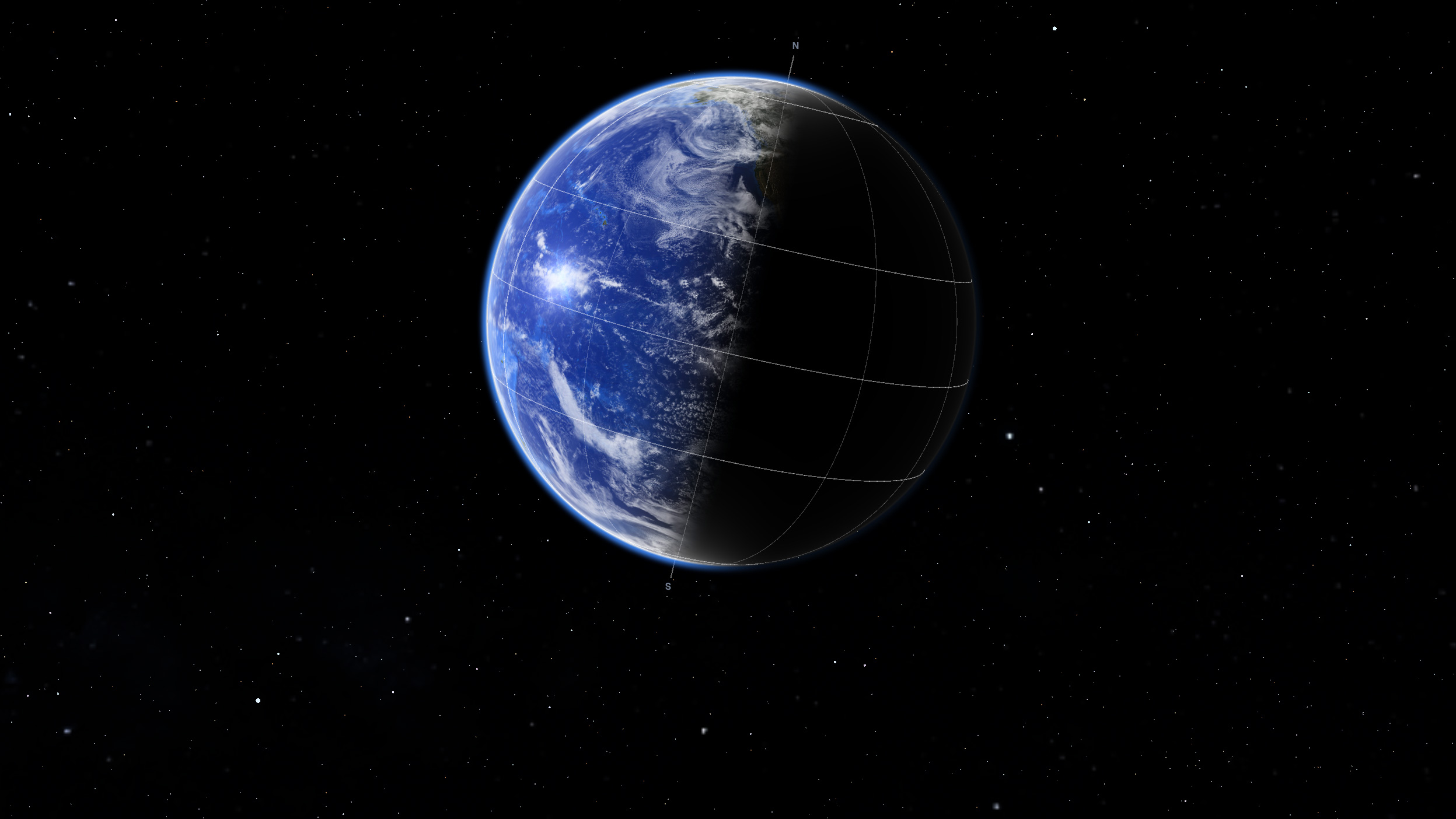
The upper stage raises the orbit, and the crew begins a day-long checkout of Orion high above Earth before heading for the Moon.
Orion fires its own engine to raise its apogee into the high checkout orbit, far above Earth.
Orion separates from the upper stage and flies on alone: its own engine now carries it toward the Moon.
Trans-lunar injection: Orion's engine fires to leave Earth orbit, the first crew sent toward the Moon since 1972.
In command: Reid Wiseman, a US Navy test pilot who once led a mission aboard the International Space Station.
Pilot Victor Glover, a Navy aviator flying to the Moon as the first person of color sent on a lunar mission.
Mission specialist Christina Koch, an engineer who holds the record for the longest single spaceflight ever flown by a woman.
Mission specialist Jeremy Hansen, a Canadian fighter pilot and the first person from outside the United States bound for the Moon.
Together they are the first crew to leave low Earth orbit in over fifty years, and the most diverse ever sent toward the Moon.
Orion swings around the Moon's far side on a free-return path: no braking burn, lunar gravity alone bending it back toward home.
Homeward bound, coasting back across roughly 400,000 kilometers to Earth.
Orion jettisons its service module and turns the crew module heat-shield-forward for the plunge back through the atmosphere.
Entry interface: the capsule hits the atmosphere at nearly 40,000 km/h, wrapped in a sheath of plasma hotter than the Sun's surface.
Through the heat and the deceleration, eleven parachutes deploy in sequence to slow Orion for a gentle ocean landing.
Orion splashes down in the Pacific off California, closing the first crewed lunar mission of the Artemis era.